Memory foam vs. hybrid mattress, latex or old-school innerspring — the mattress type you choose shapes how a bed feels, how hot it sleeps, how much it bounces and how long it lasts, often more than the brand name on the label.
Most shoppers start by comparing brands. At ExportAZ we think it makes more sense to choose the type first, then shop within it. Once you know whether you want deep contouring, springy lift or something in between, the shortlist gets much shorter. Below we break down how each of the main mattress types is built, what it feels like, who it suits, how long it typically lasts and what it costs, followed by a side-by-side comparison table.
Key Takeaways
- Memory foam offers the deepest contouring and the best motion isolation, but it sleeps warmest and responds slowly.
- Hybrids combine pocketed coils with foam or latex for the most balanced feel, better airflow and stronger edges — at a higher price.
- Latex is buoyant, cool and the most durable type, often lasting a decade or more; Dunlop is denser, Talalay is lighter and bouncier.
- Innersprings are the cheapest and bounciest, but give the least pressure relief and wear out fastest.
- Gel, copper and graphite infusions add modest cooling at best; airflow and construction matter far more.
Memory Foam Mattresses
Construction
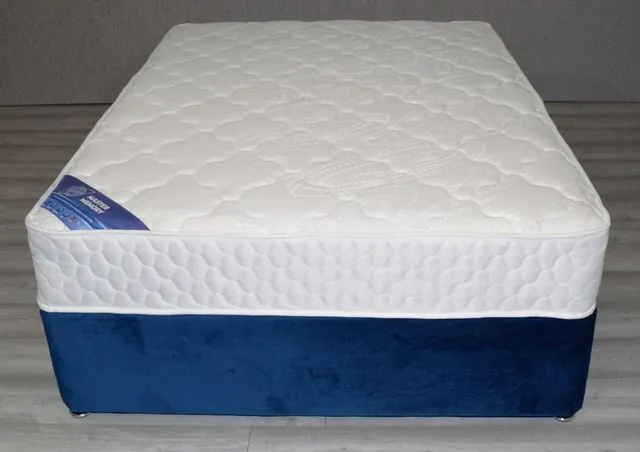
Memory foam is viscoelastic polyurethane foam: it softens with heat and pressure, then slowly returns to shape. A typical all-foam mattress has 2–4 inches of memory foam on top, a transition layer of firmer foam, and a 6–8 inch base of high-density polyfoam that provides the actual support. Foam density, measured in pounds per cubic foot (lb/ft³), is the best indicator of quality: roughly 3 lb/ft³ and below is low density, 3–5 is medium, and above 5 is high density.
Feel
The signature memory foam feel is a slow, cradling “sink-in” that molds closely around the shoulders and hips. It feels like the bed is hugging you, and it takes a second or two to rebound when you move. Newer formulations respond faster, but the hug is still the defining trait.
Pros
- Excellent pressure relief, especially for side sleepers
- Best-in-class motion isolation for couples
- Silent — no coils to squeak
- Wide range of budget-friendly options
Cons
- Tends to trap heat, especially denser foams
- Slow response can make changing position harder
- Weaker edge support than coil beds
- New-foam odor (off-gassing) for the first few days
Who it suits: side sleepers, people with pressure-point sensitivity at the shoulders or hips, and light sleepers who share a bed. Lifespan: roughly 6–8 years; high-density foams can last longer, while budget low-density foams may soften noticeably within a few years. Price (queen): about $300–$1,500.
Gel, Copper and Graphite Foams: An Honest Look
Because traditional memory foam sleeps warm, manufacturers add materials meant to pull heat away. Here is what they can and can’t do:
- Gel infusions (beads, swirls or gel layers) absorb some body heat and can make the surface feel cooler when you first lie down. Once the gel reaches body temperature, the effect largely fades.
- Phase-change materials, usually in the cover, absorb heat around a set temperature and feel cool to the touch. They help most at bedtime and have limited capacity over a full night.
- Copper and graphite are thermally conductive and can help spread heat. Copper is also marketed as antimicrobial, but the small amounts in foam are unlikely to make a practical difference in a covered mattress.
In our hands-on temperature checks at ExportAZ, construction matters more than additives. Open-cell foam, a thinner memory foam layer, perforations and — above all — a coil support core do more for cooling than any infusion. If you sleep hot, our cooling mattress guide for hot sleepers covers the factors that actually move the needle.
Good to know: “Gel memory foam” is not a different mattress type. It is memory foam with an additive, and it will still feel and sleep much like memory foam.
Hybrid Mattresses
Construction
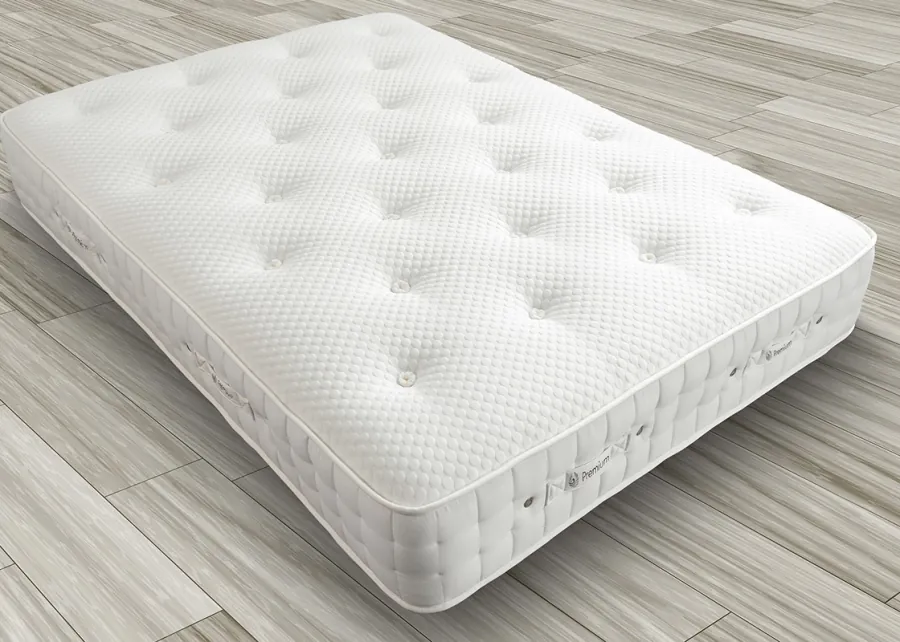
A hybrid pairs a pocketed coil support core — usually 6–8 inches of individually wrapped springs — with a substantial comfort system of memory foam, polyfoam, latex or a mix, typically at least 2–3 inches thick. Many add a layer of micro-coils for extra airflow and bounce, zoned coils that are firmer under the hips, and reinforced perimeter coils for sturdier edges.
Feel
Hybrids sit between foam and innerspring. You get some contouring from the comfort layers and noticeable lift and bounce from the coils, which makes moving around easy. The exact balance depends on comfort-layer thickness: a hybrid with 4 inches of memory foam can feel close to an all-foam bed, while one with a thin latex top feels springy and “on top.”
Pros
- Balanced feel that suits the widest range of sleepers
- Better airflow and cooling than all-foam beds
- Strong edge support, especially with perimeter coils
- Easy to move and change positions
Cons
- More expensive than comparable all-foam beds
- Heavy and harder to move
- Slightly more motion transfer than memory foam
- Quality varies widely between “budget hybrids” and premium models
Who it suits: combination sleepers, back sleepers, couples, hot sleepers and people over about 230 lb, who benefit from the coil support. Lifespan: roughly 6–8 years, and often longer for well-built models with sturdy coils and latex comfort layers. Price (queen): about $900–$2,500, with entry-level hybrids starting lower.
Memory Foam vs. Hybrid Mattress: The Head-to-Head
This is the decision most online shoppers face. Choose memory foam if pressure relief and motion isolation are your top priorities and you don’t sleep hot. Choose a hybrid if you run warm, change positions a lot, sit on the edge of the bed often, or weigh more than average. Couples are split: memory foam wins on movement, while hybrids win on edges and cooling. Our motion isolation roundup includes strong options in both camps, based on our kettlebell and wine-glass drop testing.
Budget can be the tiebreaker. A good mid-range memory foam bed often costs a few hundred dollars less than a hybrid of similar quality — but a cheap hybrid with thin, low-density foam can be a worse buy than a well-made all-foam mattress.
Still torn between types?
Our free Mattress Finder quiz weighs your sleep position, body weight, temperature and partner needs to recommend a mattress type and firmness range.
Take the Mattress Finder QuizLatex Mattresses
Construction
Latex foam is made from the sap of the rubber tree (natural latex), from petroleum-based synthetic rubber, or from a blend of the two. Natural latex is generally the most durable and the most expensive; blended and synthetic versions cost less and feel similar at first but may not hold up as long. An “all-latex” bed uses latex for both comfort and support layers, while a “latex hybrid” puts latex over pocketed coils.
Dunlop vs. Talalay latex
The two production methods create noticeably different foams:
| Dunlop | Talalay | |
|---|---|---|
| Process | Whipped latex is poured into a mold and baked; sediment settles, so the bottom is slightly denser | Mold is partly filled, vacuum-expanded, flash-frozen, then baked, producing an even cell structure |
| Feel | Denser, firmer, more “solid” support | Lighter, airier, bouncier and more consistent |
| Typical use | Support cores and firmer comfort layers | Plush comfort layers |
| Organic options | Common (GOLS-certified organic is usually Dunlop) | Less common |
| Cost | Generally lower | Generally higher; more energy-intensive process |
Feel
Latex contours gently but pushes back immediately. It feels buoyant — more “floating on” than “sinking into” — with a lively bounce. There is no slow-sink delay, so turning over is effortless.
Pros
- Exceptionally durable; resists sagging and body impressions
- Naturally breathable, so it sleeps cooler than memory foam
- Responsive and bouncy, easy to move on
- Organic and certified options are widely available
Cons
- Expensive, especially natural and organic models
- Very heavy — a queen all-latex bed often weighs well over 100 lb
- Less motion isolation than memory foam
- Not suitable for people with a latex allergy without medical advice
Who it suits: combination and back sleepers, hot sleepers, eco-minded shoppers and anyone who wants a long-term investment. Lifespan: roughly 8–12 years, sometimes longer for natural latex. Price (queen): about $1,200–$3,000 or more.
Pro tip: “Natural latex” is not the same as certified organic. If organic matters to you, look for GOLS certification for the latex and GOTS for the cotton or wool cover.
Innerspring Mattresses
Construction
Innersprings use a coil support core with a relatively thin comfort layer — often an inch or two of polyfoam or fiber padding. The coil system defines the bed:
- Bonnell coils: hourglass-shaped springs laced together; the oldest and cheapest design, with the most motion transfer.
- Offset coils: hinged hourglass coils that contour slightly better and run quieter.
- Continuous coils: rows formed from a single wire; durable and inexpensive but less contouring.
- Pocketed coils: individually wrapped springs; better isolation, and the core used in hybrids.
Coil gauge describes wire thickness — a lower number means thicker, firmer wire, typically in the 12–15 range. Beyond a reasonable minimum, coil count matters less than gauge, design and comfort layers.
Feel
Classic innersprings feel bouncy, firm and “on top,” with little contouring. They are what many people grew up sleeping on.
Pros
- Most affordable mattress type
- Very bouncy and responsive
- Good airflow keeps them cool
- Familiar feel and widely available in stores
Cons
- Limited pressure relief for side sleepers
- Connected coils transfer motion and can squeak
- Thin comfort layers develop body impressions quickly
- Shortest typical lifespan
Who it suits: budget shoppers, stomach and back sleepers who like a firm, bouncy surface, guest rooms and kids’ beds. Lifespan: roughly 5–7 years. Price (queen): about $300–$1,200.
Other Mattress Types: Airbeds and Pillow-Tops
Adjustable airbeds
Adjustable airbeds replace coils or foam with air chambers you inflate or deflate with a pump, usually under a foam comfort layer. Dual-chamber models let partners set different firmness on each side, which can resolve a real couples’ conflict. The trade-offs are cost (often $1,000–$4,000 or more), more parts that can fail, and a slight dip between chambers. With pump or chamber replacements, many last 8 years or more.
Pillow-tops and Euro tops
A pillow-top is an extra layer of padding stitched onto the surface of an innerspring or hybrid; a Euro top is similar but sewn flush with the edges for a neater, firmer perimeter. Both add plushness, but these soft top layers are often where body impressions show up first. Look for higher-density foam or latex in the top rather than loose fiberfill.
Mattress Types Compared Side by Side
Ratings reflect typical, well-made examples of each type, based on our testing and spec analysis. Individual models can perform better or worse depending on materials and design.
| Type | Feel | Motion isolation | Bounce | Cooling | Edge support | Durability | Price (queen) |
|---|---|---|---|---|---|---|---|
| Memory foam | Deep, slow hug | Excellent | Low | Fair | Fair | 6–8 yrs | $300–$1,500 |
| Hybrid | Balanced contour and lift | Good–very good | Good | Good | Very good | 6–8+ yrs | $900–$2,500 |
| Latex | Buoyant, springy | Fair–good | Excellent | Very good | Good | 8–12+ yrs | $1,200–$3,000+ |
| Innerspring | Firm, bouncy, “on top” | Poor–fair | Excellent | Very good | Good | 5–7 yrs | $300–$1,200 |
| Airbed | Adjustable | Good | Low–fair | Fair | Fair | 8+ yrs (with parts) | $1,000–$4,000+ |
Which Mattress Type Is Best for You?
There is no single best mattress type — only the best match for your body and priorities. As a starting point:
- Side sleepers: memory foam or a hybrid with a thick foam or latex comfort layer.
- Back sleepers: hybrid or latex, typically medium-firm.
- Stomach sleepers: firmer hybrid, latex or innerspring with minimal sink.
- Combination sleepers: latex or a responsive hybrid.
- Heavier sleepers (over about 230 lb): sturdy hybrid or latex with thicker layers.
- Hot sleepers: latex, hybrid or innerspring.
- Couples: memory foam for motion isolation; hybrid for an all-round balance.
- Tight budgets: a well-made memory foam bed usually beats a cheap hybrid.
Type is only half the decision; firmness is the other. Pair this guide with our mattress firmness guide, and if back pain is a factor, read our guide to the best mattress for back pain — and talk to a doctor or physical therapist about persistent pain.
The Bottom Line
When it comes to memory foam vs. hybrid vs. latex vs. innerspring, every type is a set of trade-offs. Memory foam hugs and isolates motion but runs warm. Hybrids balance contour, bounce, edges and cooling at a higher price. Latex is the long-term, cool, buoyant option if your budget allows. Innerspring remains the affordable, bouncy choice with the shortest life. Decide which trade-offs you can live with, then shortlist within that type. For the full buying process, see our complete guide to choosing a mattress.
Frequently Asked Questions
Is a hybrid or memory foam mattress better?
Neither is better for everyone. Memory foam is usually the better choice for side sleepers who want deep pressure relief and couples who prioritize motion isolation. Hybrids suit hot sleepers, combination sleepers, heavier people and anyone who wants stronger edges and easier movement. If you sleep warm and change positions often, a hybrid is generally the safer bet.
Which mattress type lasts the longest?
Latex is typically the most durable type, often lasting around 8–12 years and sometimes longer for natural latex. Well-built hybrids come next. Memory foam lifespan depends heavily on foam density, and traditional innersprings tend to wear out first. Whatever you buy, a supportive foundation, a protector and regular rotation help extend its life.
Does gel memory foam really sleep cooler?
Only somewhat. Gel can make the surface feel cooler when you first lie down, but once it warms to body temperature the effect largely fades. Open-cell foam, thinner memory foam layers and a coil support core make a bigger difference. If heat is a serious problem for you, a hybrid or latex mattress is usually a better solution than gel foam alone.
What is the difference between Dunlop and Talalay latex?
Both are latex foams made by different processes. Dunlop is poured and baked, which makes it denser, firmer and generally less expensive; it is also the type most often available as certified organic. Talalay adds vacuum expansion and flash-freezing, creating a lighter, bouncier and more uniform foam that usually costs more and is often used in plush comfort layers.
Are innerspring mattresses outdated?
Not entirely. Traditional innersprings remain a sensible, affordable choice for guest rooms, kids’ beds and people who like a firm, bouncy feel. However, most shoppers now get better pressure relief and less motion transfer from hybrids, which use pocketed coils plus thicker comfort layers. If you like innerspring bounce but want more comfort, a hybrid is the natural upgrade.
Is a latex mattress safe if I have a latex allergy?
It depends on the person and the severity of the allergy. Latex in mattresses is typically washed during manufacturing and enclosed beneath a cover, so direct contact is limited. Still, if you have a diagnosed latex allergy, speak with your doctor before buying, or choose a foam or hybrid without latex.