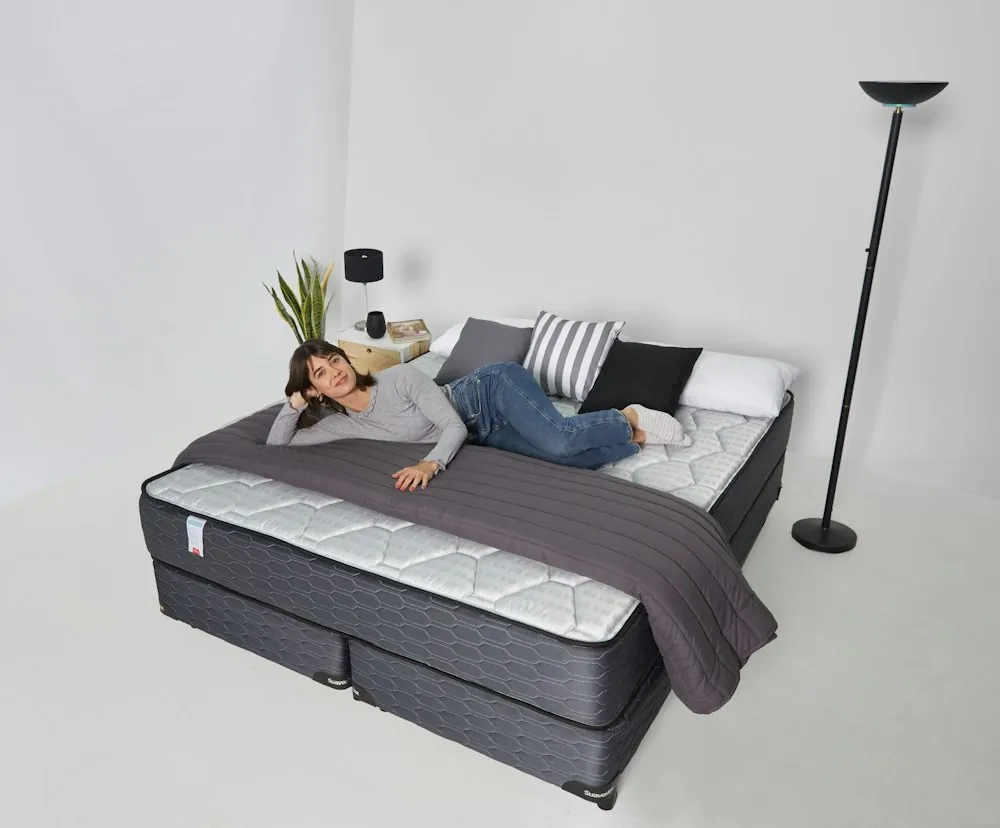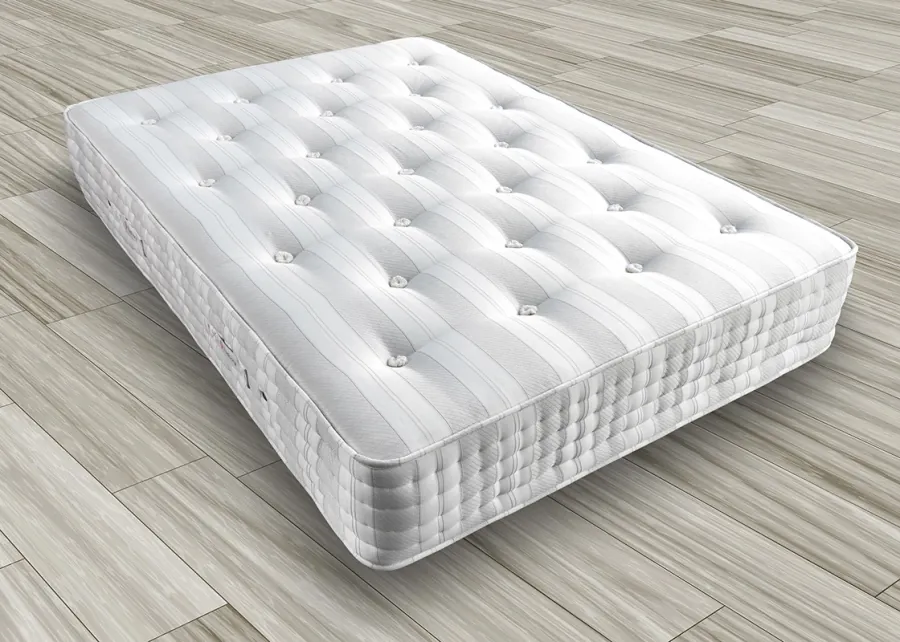

Finding the best mattress for back pain is less about chasing a “miracle” bed and more about matching support, firmness and materials to the way your body actually rests at night. The right mattress will not cure a back problem, but the wrong one can make mornings noticeably harder.
Back pain is also a category full of exaggerated marketing — “orthopedic” and “spine-aligning” are largely unregulated labels. This guide focuses on what generally matters: spinal alignment, appropriate firmness, materials, sleep position and pillows.
Not medical advice: This article is general educational information from the ExportAZ editorial team, not a diagnosis or treatment plan. Back pain has many possible causes. If your pain is persistent, severe or getting worse, please consult a doctor or licensed physical therapist before relying on a mattress change.
Key Takeaways
- A mattress helps back pain mainly by keeping your spine in a neutral position and reducing pressure points, not by “treating” the underlying cause.
- Research has generally favored medium-firm mattresses over very firm ones for many people with chronic low back pain, but individual response varies.
- Zoned support — firmer under the hips, softer under the shoulders — is one of the most useful features for back pain sufferers.
- Pillow placement (between the knees, under the knees or under the pelvis) can matter as much as the mattress itself.
- Certain symptoms, such as leg weakness or changes in bladder or bowel control, need prompt medical attention.
Why Your Mattress Matters for Spinal Alignment
Your spine has three natural curves: at the neck, the upper back and the lower back. When you lie down for seven or eight hours, the mattress has to support those curves.
A mattress that is too soft lets the heaviest parts of your body — usually the hips and pelvis — sink further than the rest. On your back, that creates a hammock shape that flattens or exaggerates the lumbar curve. On your stomach, it pushes the lower back into an arch. A mattress that is too firm fails in the opposite way: it does not let the shoulders and hips sink enough, so a side sleeper’s spine bends upward at the waist, and a back sleeper may be left with an unsupported gap beneath the lower back.
Either way, muscles around the spine can stay subtly loaded all night. Many people notice this as stiffness on waking that eases after 20 or 30 minutes of movement. Pressure points matter too: an aching shoulder or hip makes you shift position often, fragmenting sleep, and poor sleep is associated with greater pain sensitivity.
Is Medium-Firm the Best Mattress for Back Pain?
For decades, the conventional advice was to sleep on the firmest mattress possible. That view has shifted. Research comparing mattress firmness has generally favored medium-firm surfaces over very firm ones for many people with chronic low back pain, and most clinicians and sleep organizations now describe medium-firm as a sensible starting point rather than “as hard as possible.”
There are caveats: the studies are limited, “medium-firm” is not standardized between brands, and people respond differently. A lightweight side sleeper may need medium-soft; a heavier stomach sleeper may need firm. Medium-firm is a reasonable default, not a prescription. Our mattress firmness guide includes a matrix that adjusts the recommendation by sleep position and body weight.
Pro tip: Body weight shifts perceived firmness. If you weigh over about 230 lb, a bed labeled “medium-firm” may feel closer to medium, so look for thicker support cores and denser comfort foams. If you weigh under about 130 lb, a “medium-firm” bed may feel firm.
Lower Back Pain vs. Upper Back Pain
Where your pain is located changes what you should prioritize in a mattress.
Lower back pain
The lumbar spine and pelvis carry a large share of your weight when lying down, so lower back pain is most affected by hip sinkage. Prioritize a supportive core (pocketed coils or dense latex/foam), a medium to medium-firm feel and, ideally, zoned support that keeps the hips lifted. Back sleepers with lower back pain often benefit from a pillow under the knees, which gently flattens the lumbar curve and reduces tension.
Upper back, shoulder and neck pain
Pain between the shoulder blades, or in the neck and shoulders, is often linked to shoulder pressure and pillow height. Side sleepers need the shoulder to sink in enough that the neck is not bent sideways. A slightly softer comfort layer, or a zoned mattress softer at the shoulders, plus the right pillow loft usually matters more than overall firmness.
Best Materials and Zoned Support for Back Pain
Mattress construction affects how evenly support is delivered and how well pressure points are relieved. Our memory foam vs. hybrid vs. latex comparison covers each type in depth; here is how they relate to back pain specifically.
- Memory foam: Excellent pressure relief and close contouring, which can help side sleepers and people with sensitive joints. Lower-density or overly thick memory foam can let the hips sink too far, so look for a firm base layer and avoid very soft models if you have lower back pain.
- Latex: Buoyant and responsive, with contouring that does not let you sink as deeply as memory foam. Often a strong option for combination sleepers and anyone who finds it hard to change position on foam.
- Hybrid (coils plus foam or latex): Combines a coil support core with cushioning comfort layers. Hybrids are frequently the most balanced choice for back pain, especially for heavier sleepers and couples.
- Traditional innerspring: Supportive but often with thin comfort layers that create pressure points; rarely our first suggestion for back pain.
Why zoned support matters
Zoned mattresses vary firmness along their length — typically softer under the shoulders, firmer under the hips and lumbar area, and moderate under the legs. This mirrors how your weight is distributed and makes it easier for one mattress to support the hips while still cushioning the shoulders. Zoning can be achieved with different coil gauges, different foam densities or cut patterns in latex.
Pros
- Zoned hybrids balance hip support and shoulder pressure relief
- Latex resists sagging and makes repositioning easy
- Memory foam excels at relieving sharp pressure points
Cons
- Zoning works best if you sleep in the intended orientation (head to headboard)
- Soft, low-density foams may let hips sink over time
- “Orthopedic” labels are marketing terms, not a guarantee of support
Best Mattress for Back Pain by Pain Type
The table below summarizes the mattress types and features we generally suggest as a starting point for common back pain patterns. These are product-type suggestions, not medical recommendations, and they assume an average body weight.
| Pain pattern | Suggested mattress type | Firmness range | Features to look for |
|---|---|---|---|
| General lower back pain | Zoned hybrid or latex | Medium to medium-firm (5–7) | Firmer lumbar/hip zone, durable support core |
| Upper back, shoulder or neck pain | Hybrid or memory foam with a thicker comfort layer | Medium-soft to medium (4–6) | Softer shoulder zone, correct pillow loft |
| Morning stiffness, sore joints | Latex or memory foam hybrid | Medium (5–6) | Strong pressure relief, responsive surface for easy turning |
| Radiating leg pain (sciatica-type symptoms) | Zoned hybrid | Medium to medium-firm (5–7) | Even hip support, compatible with knee pillow or adjustable base |
| Pain worse lying flat | Hybrid or foam on an adjustable base | Medium (5–6) | Head and leg elevation, zero-gravity setting |
| Heavier sleepers with back pain (over 230 lb) | Hybrid with reinforced coils and dense foams | Medium-firm to firm (6–8) | Thicker profile, high-density foams, strong edges |
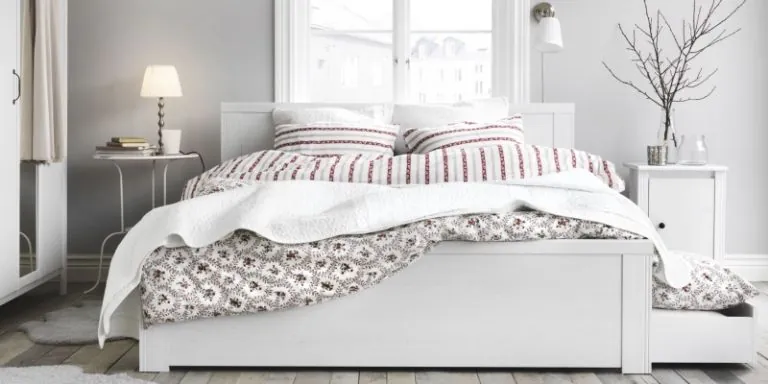
Sleep Positions and Pillow Placement for Back Pain
Side sleeping
Side sleeping is often comfortable for people with back pain, provided the spine stays straight. Place a firm pillow between your knees so the top leg does not pull the pelvis forward and twist the lower back. Alternate sides when possible.
Back sleeping
Back sleeping spreads weight evenly. Place a pillow under your knees to reduce the arch in the lower back, and if there is still a gap at the waist, try a small rolled towel under the lumbar curve. Keep the head pillow moderate in height so the chin is not pushed toward the chest.
Stomach sleeping
Stomach sleeping is usually the hardest position on the back and neck, because it tends to arch the lower spine and requires turning the head to one side for hours. If you cannot change the habit, place a thin pillow under your pelvis and lower abdomen to reduce the arch, and use a very thin head pillow or none at all.
Choosing the Right Pillow
Your pillow’s job is to keep your neck in line with the rest of your spine. The right loft (height) depends mainly on position and shoulder width:
- Side sleepers: Medium to high loft, firm enough to fill the space between ear and outer shoulder. Broader-shouldered people generally need more height.
- Back sleepers: Medium loft with some support under the neck curve; contoured or adjustable-fill pillows work well.
- Stomach sleepers: Low loft and soft, or none at all.
Remember that a softer mattress lets your shoulder sink further, which reduces the pillow height you need. If you change mattresses, re-evaluate your pillow too.
Do Adjustable Bases Help Back Pain?
An adjustable base lets you raise the head, the legs or both. For some people with back pain, the “zero-gravity” position — head slightly raised and knees elevated above the heart — reduces load on the lower back and feels noticeably more comfortable than lying flat. Adjustable bases are a meaningful investment and work best with flexible mattresses, so check compatibility first; a split king lets each partner choose their own position.
When a Mattress Topper Helps — and When It Does Not
A topper can be a smart, lower-cost step if your current mattress is structurally sound but feels too firm. A 2–3 inch memory foam or soft latex topper can relieve shoulder and hip pressure for side sleepers and make an overly firm surface more forgiving.
A topper will not fix a mattress that is sagging, has deep body impressions or no longer supports your hips evenly. In that case, the topper sinks into the same dip and the alignment problem remains. Our mattress care and replacement guide explains how to check.
Get a personalized back and joint comfort plan
Our Back & Joint Comfort Review ($69) looks at your sleep position, body weight, current mattress, pillow and pain pattern, then recommends specific mattress types, firmness ranges and setup changes. It complements, and never replaces, advice from your doctor or physical therapist.
See the Back & Joint Comfort ReviewRed-Flag Symptoms: When to See a Doctor
Most back pain is mechanical and improves over time, but some symptoms suggest a condition that a new mattress cannot address.
Seek prompt medical care if you have back pain with any of the following: numbness in the groin, buttocks or inner thighs; new difficulty controlling your bladder or bowels; weakness, numbness or tingling in one or both legs that is getting worse; fever or feeling generally unwell; unexplained weight loss; a history of cancer; pain following a fall, accident or other injury; or severe pain that does not ease with rest or changing position, including pain that consistently wakes you at night. Changes in bladder or bowel control or groin numbness should be treated as an emergency.
Even without red flags, see a doctor or physical therapist if pain lasts more than a few weeks, keeps returning or limits daily activities. Reputable public resources like the National Heart, Lung, and Blood Institute also publish general guidance on healthy sleep.
A Gentle Morning Stretching Routine
Many people with back pain feel stiffest in the first half hour after waking. The routine below uses common, low-intensity stretches. Move slowly, breathe steadily and stop any movement that causes sharp or radiating pain. If you have a diagnosed back condition, ask your physical therapist which of these are appropriate for you.
- Knee-to-chest stretch. Lying on your back, gently pull one knee toward your chest and hold for 20–30 seconds, then switch sides. Repeat two or three times.
- Pelvic tilts. With knees bent and feet flat, gently flatten your lower back into the surface by tightening your abdominal muscles, hold for a few seconds, then relax. Repeat 8–10 times.
- Lower trunk rotation. Keeping knees bent and together, slowly let them fall to one side, pause, then bring them to the other side. Repeat 8–10 times per side within a comfortable range.
- Cat-cow. On hands and knees, slowly round your back toward the ceiling, then let it gently sag while lifting your head. Repeat 8–10 times.
- Child’s pose. From hands and knees, sit back toward your heels and reach your arms forward. Hold for 20–30 seconds while breathing deeply.
- Glute bridge. Lying on your back with knees bent, squeeze your glutes and lift your hips until your body forms a straight line from shoulders to knees. Hold briefly and lower. Repeat 8–10 times.
Our guide on how to choose a mattress pulls the full purchase plan together, and the Mattress Finder quiz can suggest a firmness range in a couple of minutes.
The Bottom Line
The best mattress for back pain is the one that keeps your spine close to neutral in the position you actually sleep in, while relieving pressure at the shoulders and hips. For many people that means a medium to medium-firm mattress with a supportive core and, ideally, zoned support — but body weight, pain location and personal comfort all shift the target. Pair it with correct pillow placement, use your sleep trial to confirm that mornings genuinely improve, and treat a mattress as one part of managing back pain, not a substitute for professional care. At ExportAZ, we would rather you spend a few weeks testing carefully than trust a label that says “orthopedic.”
Frequently Asked Questions
Is a firm mattress better for back pain?
Not automatically. The old advice to sleep on the hardest possible surface has largely been replaced by a preference for medium-firm mattresses, which research has generally favored for many people with chronic low back pain. A very firm bed can create pressure points and leave the lower back unsupported.
What type of mattress is best for lower back pain?
Zoned hybrids and latex mattresses are often strong choices because they keep the hips lifted while cushioning the shoulders. Memory foam can also work well if it has a firm, high-density base and is not too soft. Whichever type you choose, aim for a medium to medium-firm feel and test spinal alignment during your sleep trial.
Can a bad mattress cause back pain?
A mattress that is sagging, too soft or too firm can contribute to morning stiffness and discomfort by holding the spine out of alignment for hours. Stiffness that eases within 20–30 minutes of getting up is a common sign. However, back pain has many causes, so if pain persists after addressing your sleep setup, consult a doctor or physical therapist.
How long should I wait to see if a new mattress helps my back?
Give a new mattress roughly two to four weeks of nightly use before judging it, since materials soften slightly and your body needs time to adjust. If pain is clearly worse after the first month, use your trial to exchange or return it, and check that your foundation is solid and flat.
What is the best sleeping position for back pain?
Side and back sleeping are generally easiest on the spine. Side sleepers should use a pillow between the knees to keep the pelvis level, and back sleepers often benefit from a pillow under the knees. Stomach sleeping tends to arch the lower back and twist the neck; if you cannot avoid it, place a thin pillow under your pelvis.
Will a mattress topper help my back pain?
A topper can help if your mattress is still supportive but feels too firm, because it adds pressure relief at the shoulders and hips. It will not fix a mattress that sags or has deep body impressions, because the topper follows the dip beneath it. In that situation, replacing the mattress is usually the more effective solution.