If you regularly wake up damp, kick the covers off at 3 a.m., or flip your pillow hunting for the cool side, you are not alone, and the fix is rarely one magic product. The right cooling mattress for hot sleepers helps, but it works best as one part of a system that also includes your sheets, pillow, protector, room temperature and evening habits.
This guide explains why some people run hot at night, which mattress materials trap or release heat, and which “cooling technologies” are worth paying for. We then cover bedding, pillows, protectors and the bedroom itself, and finish with a step-by-step setup.
At ExportAZ, temperature checks are part of our hands-on testing, and one lesson keeps repeating: how a bed feels in the first five minutes says little about how it feels after an hour.
Key Takeaways
- Your core body temperature needs to drop slightly for you to fall and stay asleep. Anything that traps heat around your body works against that.
- Innerspring and hybrid coils, latex and open-cell foams usually sleep cooler than dense, traditional memory foam.
- Gel, copper, graphite and phase-change covers add a cool touch at first, but their effect is limited. Airflow matters more than additives.
- Percale cotton, linen and lyocell (Tencel) sheets usually sleep cooler than microfiber, flannel or heavy sateen.
- A bedroom around 60–67°F (15.6–19.4°C) with moderate humidity and moving air often makes a bigger difference than a new mattress.
Why Some People Sleep Hot
Body temperature and sleep are closely linked. In the evening your core temperature starts to fall as part of your circadian rhythm, and your body sheds heat through the skin, especially through your hands and feet. That gentle cooling is one of the signals that helps you fall asleep. If the heat has nowhere to go because the room is warm, the bedding is heavy or the mattress is insulating, your body works harder to cool down, and lighter sleep and more awakenings can follow.
Hormones, night sweats and health factors
Hormonal shifts are a common cause of hot nights. Many people going through perimenopause and menopause have hot flashes and night sweats that can wake them several times a night. Pregnancy, some medications, thyroid problems, infections and sleep apnea can also be linked with night sweats.
When to see a doctor: Bedding and room changes help with ordinary heat, but they do not treat a medical cause. If you have drenching night sweats that soak your sheets, sweats that start suddenly, or sweats that come with fever, unexplained weight loss, loud snoring or gasping, talk to a doctor. Persistent menopause symptoms are also worth discussing, because effective treatments exist.
Sharing the bed
Two bodies under one duvet produce roughly twice the heat in the same space, and partners often prefer different temperatures. Separate duvets (common in Scandinavia), sheets made from a cooling fabric, and a mattress that doesn’t dip toward the middle all help. If your partner’s movements wake you too, see our roundup of the best mattresses for motion isolation.
The room itself
Upstairs and west-facing bedrooms, poorly insulated attics and air conditioning that switches to an energy-saving setting overnight all trap heat. Humidity also makes a room feel stuffy, because sweat evaporates more slowly in damp air.
Choosing a Cooling Mattress for Hot Sleepers: Materials Compared
Three things decide how warm a mattress feels: airflow (can warm air escape?), contact area (how much of your body is surrounded by material?) and moisture handling (can sweat vapor move away from your skin?). Firmness matters too. A soft bed lets you sink in and surrounds more of your body, so even a “cooling” model can feel warm if it is very plush. Our memory foam vs hybrid vs latex comparison covers the construction differences in more depth.
| Material | Heat behavior | Typical feel for hot sleepers | Best for |
|---|---|---|---|
| Traditional (dense) memory foam | Softens with body heat, hugs closely, limited airflow | Warmest option; heat builds over the night | Cool or average sleepers who want deep contouring |
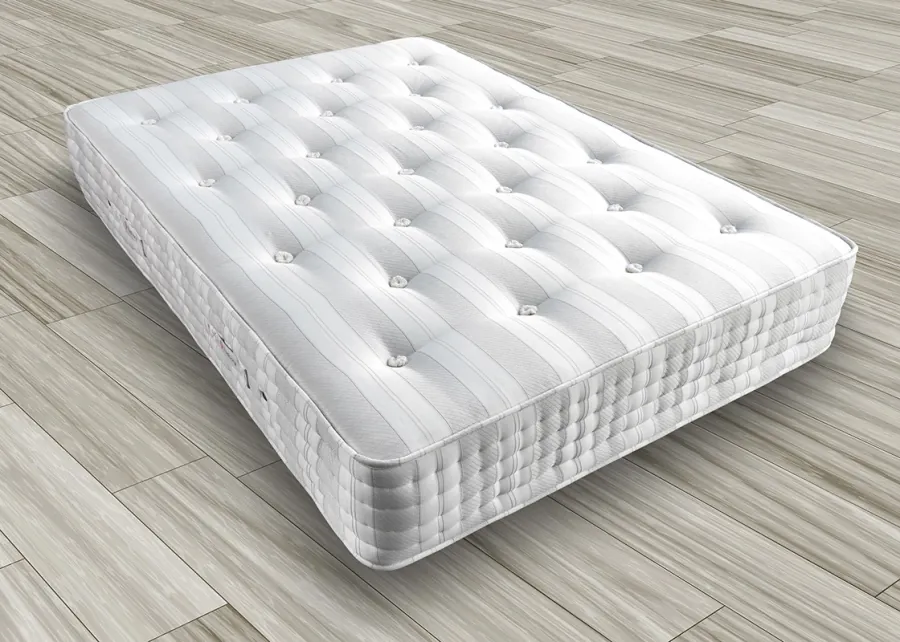
| Open-cell or perforated memory foam | More connected air pockets, quicker rebound | Noticeably better than dense foam, still warmer than coils | Fans of foam who run slightly warm |
| Polyfoam | Responsive, sinks less than memory foam | Neutral to slightly warm | Budget beds, support layers |
| Latex (Talalay or Dunlop) | Open cells plus pinholes; buoyant, so you sit “on” it | Cool to neutral; one of the better all-foam options | Hot sleepers who want a foam-like or natural-material feel |
| Innerspring | Large air spaces inside the coil core | Coolest overall, especially with a thin comfort layer | Very hot sleepers, back and stomach sleepers |
| Hybrid (coils + foam or latex) | Coil core vents heat; comfort layer decides the surface feel | Cool to neutral, depending on the top layers | Most hot sleepers, including couples |
The closer a material sits to your body, the more it matters. A thick memory-foam layer on top of coils can still feel warm, while a hybrid with latex or thin, perforated foam on top usually stays cooler. When you read product pages, look at what makes up the top two to three inches.
Cooling Mattress Technologies for Hot Sleepers, Honestly Assessed
Gel infusions
Gel mixed into memory foam absorbs some heat and makes the surface feel cooler when you first lie down. The catch is capacity: once the gel warms to body temperature, it stops pulling heat away. It is a modest step up from plain dense foam, not a match for coils or latex.
Copper and graphite
Both conduct heat well, so they are added to foams and cover fabrics to spread heat away from hot spots. The effect depends on how much is used and how close it sits to your skin. Treat these as minor bonuses, not reasons to buy.
Phase-change material (PCM) covers
Phase-change materials absorb heat as they change state at a set temperature near skin temperature, which is why PCM covers feel noticeably cool at first. Like gel, they have a finite capacity. They help most as you fall asleep and work best on a mattress that can also vent the heat.
Open-cell foam and perforations
Open-cell foams and foams with ventilation holes or channels improve airflow, which is the cooling mechanism that actually lasts all night. This is one of the more meaningful upgrades for foam beds.
Coils and latex pinholes
Pocketed and innerspring coils are the most reliable passive cooling feature, because air moves through the support core every time you shift position. Latex comes a close second. It is made with pinholes that let air through, and Talalay latex in particular has a very open cell structure. Its buoyant, less enveloping feel also reduces contact area.
Active cooling systems
Water- or air-based cooling pads and toppers with a thermostat are the only products that actually remove heat instead of just delaying it, and many allow separate temperature zones for couples.
Pros
- Actively removes heat instead of just absorbing it
- Adjustable, often with separate sides for couples
- Can transform an otherwise comfortable foam bed
Cons
- Significant upfront cost, sometimes with subscriptions
- Pump or fan noise and regular maintenance
- Hoses and control units can be awkward in small rooms
Pro tip: Be wary of “cool to the touch” unless the listing also mentions airflow, such as coils, latex, open-cell or perforated foam, or a breathable cover. A cool first touch is pleasant, but airflow is what keeps you cool at 3 a.m.
Choosing Cooling Bedding and Sheets
Your sheets sit directly against your skin, and a poor choice can cancel out a breathable mattress. Fiber and weave matter more than thread count. Very high thread counts often mean a denser, warmer fabric, and a good percale in the 200–400 range usually feels cooler than a 1,000-count sateen.
| Fabric | Feel | Breathability | Moisture handling | Verdict for hot sleepers |
|---|---|---|---|---|
| Percale cotton | Crisp, matte, “hotel sheet” | High (one-over-one-under weave) | Good | Excellent all-rounder |
| Linen | Textured, softens with washing, wrinkles | Very high | Very good, dries quickly | Excellent, especially in humid climates |
| Lyocell / Tencel (incl. bamboo-derived) | Silky, smooth, drapey | Good | Very good wicking | Excellent for night sweats |
| Sateen cotton | Smooth, slight sheen, heavier | Moderate (denser weave) | Fair | Fine if you run only mildly warm |
| Microfiber (polyester) | Very soft, inexpensive | Low | Poor; traps moisture | Avoid if you sleep hot |
| Flannel | Brushed, fuzzy, cozy | Low (napped fibers trap air) | Fair | Winter only |
A note on “bamboo” sheets: most are bamboo viscose (rayon) or lyocell made from bamboo pulp, not raw bamboo fiber. Lyocell tends to perform best, so check the label for the fiber type. On top, swap a heavy comforter for a lightweight duvet or a cotton or linen coverlet. Thin layers let you adjust during the night instead of sweating under one thick layer.
Pillows That Don’t Trap Heat
A solid block of memory foam behind your head and neck can feel warm within minutes. Cooler options include shredded latex or shredded foam (air moves between the pieces), buckwheat hulls (very breathable but firm and noisy), and down or down alternative in a cotton shell. Pinhole latex pillows also sleep cooler than solid memory foam. Loft still matters for neck alignment, and our mattress firmness guide explains how sleep position affects the support you need.
Mattress Protectors and Toppers
A protector is essential for hygiene and warranty reasons (see our mattress care and replacement guide), but the wrong one can make a cool bed feel stuffy. Vinyl or PVC backings are warm and crinkly. A thin polyurethane membrane under a cotton or lyocell face is the better waterproof choice, and a non-waterproof cotton or lyocell protector is cooler still.
Toppers can help or hurt. A latex or perforated foam topper can cool down a dense memory-foam bed, while a thick memory-foam topper usually makes heat worse. Wool is a less obvious option that regulates temperature and moisture well.
Not sure which part of your setup is overheating you?
Our Bedroom Sleep Environment Audit reviews your mattress, bedding, room temperature and routine, then gives you a prioritized, budget-aware plan. It’s practical sleep-setup advice, not medical advice.
See the Sleep Environment AuditIdeal Bedroom Temperature and Humidity
The most commonly cited range for sleep is about 60–67°F (15.6–19.4°C). That sounds cool, but the microclimate under your bedding is much warmer. Treat it as a starting point and adjust by a degree or two after a few nights; infants and older adults often need it a little warmer.
Humidity is the overlooked half of the equation. Sweat cools you by evaporating, and humid air slows that down, so 70°F can feel stifling in a muggy room and fine in a dry one. Moderate indoor humidity, often given as roughly 30–50%, suits most people and also discourages dust mites and mold. In humid climates, a dehumidifier or the air conditioner’s dry mode can help more than lowering the thermostat. The Sleep Foundation has more on the sleep environment.
Fans and airflow
- Ceiling fans: In summer, set the blades to spin counterclockwise (seen from below) so they push air down onto the bed.
- Window fans: When it’s cooler outside than in, put a fan in one window blowing in and open another window on the far side of the home.
- Bedside fans: Moving air over your skin speeds up evaporation, so you feel cooler even if the room temperature doesn’t change.
- Daytime shade: Close blackout curtains on sun-facing windows during the day so the room doesn’t heat up before bedtime.
Pre-Bed Habits That Help You Stay Cool
- Take a warm shower or bath 1–2 hours before bed. It draws blood to the skin, and the cooling that follows can make it easier to fall asleep.
- Go easy on alcohol. It tends to fragment sleep later in the night and is linked with night sweats for some people.
- Finish heavy meals and hard workouts earlier. Both raise body temperature for a while.
- Keep caffeine to the morning and early afternoon.
- Wear light, breathable sleepwear such as loose cotton or linen, or none at all, rather than fleece or polyester.
Step-by-Step: Your Cool Bedroom Setup
Work through these in order. The first steps are cheap or free, and they are often enough.
- Measure first. Put a thermometer and hygrometer near the bed and check the readings at bedtime and around 3 a.m. for a few nights.
- Set the thermostat. Aim for roughly 60–67°F (15.6–19.4°C) overnight, and program it so the room is already cool at bedtime.
- Control humidity. If readings stay high, run a dehumidifier or the AC’s dry mode.
- Add airflow. Use a ceiling fan set to push air down, a bedside fan or a cross-breeze, and block daytime sun.
- Change your sheets. Replace microfiber or flannel with percale, linen or lyocell, in thin layers.
- Upgrade your protector and pillow. Choose a breathable protector and a shredded-fill, latex or down pillow.
- Adjust your routine. Shower earlier in the evening, eat dinner earlier and limit alcohol.
- Try a topper. On a dense foam bed, a latex, perforated foam or wool topper is a cheaper test than a new mattress.
- Replace the mattress if you need to. Prioritize coils or latex and breathable comfort layers over cooling additives. Our guide to choosing a mattress covers the rest of the decision.
The Bottom Line
The best cooling mattress for hot sleepers is one that lets air move. A hybrid or innerspring with breathable comfort layers, or a latex model, generally beats dense memory foam no matter how much gel or copper it contains. Still, the mattress is only one part of the system. Breathable sheets and protectors, a pillow that doesn’t trap heat, a bedroom around 60–67°F with moderate humidity, and a few habit changes often solve the problem on their own. Start with the cheap fixes and buy a new mattress only when the rest of your setup is already working. If you’re shopping now, the ExportAZ Mattress Finder quiz can narrow the options by sleep position, body type and temperature preference.
Frequently Asked Questions
What type of mattress is best for hot sleepers?
Hybrids and innersprings usually sleep coolest because air moves freely through the coil core. Latex is the next best option and the best choice if you want an all-foam feel, thanks to its open cells and pinholes. Dense traditional memory foam tends to sleep warmest. Whatever the type, check the top few inches of comfort material, since that layer touches your body.
Does gel memory foam actually keep you cool?
It helps a little. Gel absorbs some heat and feels cool when you first lie down, but once it reaches body temperature it stops drawing heat away. Gel foam is usually somewhat cooler than plain dense memory foam, but it is not in the same league as coils or latex. Look for gel combined with open-cell or perforated foam for better results.
What is the best temperature for a bedroom at night?
The most commonly cited range is about 60–67°F (15.6–19.4°C). It is a starting point, not a strict rule: some people sleep best toward the warmer end, and infants and older adults often need slightly warmer rooms. Try a setting for several nights, then adjust by one or two degrees. Keep humidity moderate, too, since damp air makes any temperature feel warmer.
Are cooling mattress toppers worth it?
They can be, if the topper is made from a breathable material. A latex, perforated foam or wool topper can noticeably cool down a dense memory-foam bed for much less than a new mattress. A thick memory-foam topper often makes heat worse, even when it is labeled “cooling.” Active water- or air-based toppers work best but cost more and need maintenance.
Which sheets are coolest for night sweats?
Linen and lyocell (often sold as Tencel or as bamboo-derived lyocell) are excellent for night sweats because they wick moisture and dry quickly. Percale cotton is a close, affordable alternative with a crisp, breathable feel. Avoid polyester microfiber and flannel. If night sweats are heavy, frequent or sudden, talk to a doctor, because bedding cannot treat an underlying cause.
Why do I sleep hot even with the air conditioning on?
Usually the heat is trapped close to your body rather than in the room. Common culprits are a dense foam mattress, a vinyl-backed protector, microfiber sheets, a heavy comforter or a solid memory-foam pillow. Late meals, alcohol or evening workouts can also raise your temperature. Check the bed layer by layer, starting with the cheapest fixes: sheets, protector and pillow.