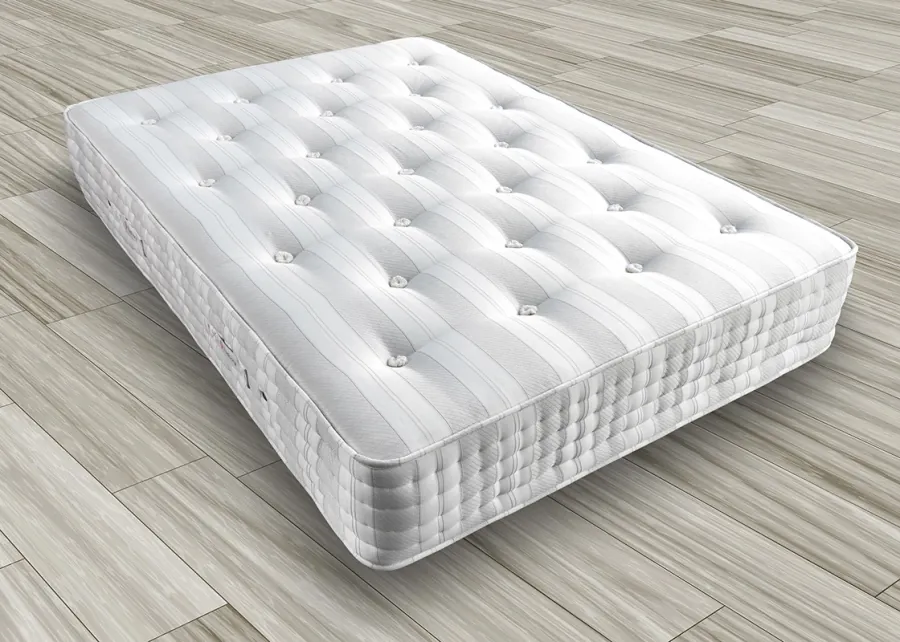

This mattress firmness guide explains how to choose the right feel for your body instead of guessing from a product page. Firmness is the single biggest factor in whether a new bed feels “right,” yet it is also the most misunderstood spec in the industry, because one brand’s “medium” can feel like another brand’s “firm.”
Below we explain what firmness measures, how it differs from support, and how to match it to your sleep position and body weight, plus advice for couples, temperature effects and a step-by-step home trial method.
Everything here draws on the hands-on testing we do at ExportAZ, combined with manufacturer specifications and long-term owner feedback.
Key Takeaways
- Firmness is how a mattress feels on the surface; support is how well it keeps your spine in neutral alignment. A bed can be soft and supportive, or firm and unsupportive.
- Most sleepers land between 4 and 7 on the 1–10 firmness scale, but sleep position and body weight shift the ideal range noticeably.
- Side sleepers and lighter people generally need softer surfaces; stomach sleepers and heavier people generally need firmer, more supportive builds.
- Memory foam feels firmer in a cold room and softer in a warm one, and most new mattresses soften slightly over the first several weeks.
- A topper can make a firm bed softer, but nothing reliably fixes a mattress that is sagging or too soft to support you.
Firmness vs. Support: Why They Are Not the Same Thing
Shoppers often use “firm” and “supportive” interchangeably, but they describe two different things, and mixing them up is a common reason a bed feels fine in the store yet hurts by week three.
Firmness is a comfort attribute. It describes how much the top few inches of the mattress give when you lie down: does it feel plush and enveloping, or does it push back immediately? Firmness is mostly determined by the comfort layers — the foam, latex, fiber or micro-coils sitting above the core.
Support is a structural attribute. It describes how well the mattress keeps your spine in a neutral line from neck to tailbone, preventing heavy areas like the hips and shoulders from sinking too far (or not far enough). Support comes mainly from the core: pocketed coils, high-density base foam or dense latex.
Because the two come from different layers, they combine in almost any way: a pillow-top hybrid can feel soft while its coils stop your hips bottoming out, and a cheap all-foam bed can feel firm yet sag within a year. Ask two questions separately: “Does this surface feel comfortable?” and “Is my spine straight?”
Good to know: Firmness ratings are subjective and are not standardized between brands. Treat a manufacturer’s rating as a starting point, and compare it with independent testing and the material breakdown described in our memory foam vs. hybrid vs. latex comparison.
The 1–10 Mattress Firmness Scale Explained
Most reviewers and many brands describe feel on a 1–10 scale, where 1 is the softest and 10 is the firmest. In practice, very few mattresses sold today fall at the extremes. The table below describes what each level typically feels like and who it tends to suit.
| Rating | Label | What it feels like | Typically suits |
|---|---|---|---|
| 1–2 | Extra soft | Deep sink and heavy “hug”; you feel cradled more than held up. Rarely sold as a standalone mattress. | Very few sleepers; mostly found in toppers |
| 3 | Soft | Noticeable sinkage with strong contouring around shoulders and hips. | Lightweight side sleepers, people with sharp shoulder pressure |
| 4 | Medium-soft | Plush surface with gentle cradling, but you do not feel “stuck.” | Side sleepers under about 230 lb, many combination sleepers |
| 5 | Medium | Balanced: some contouring, some push-back. Often marketed as “universal comfort.” | Lightweight back sleepers, combination sleepers, many couples |
| 6 | Medium-firm | Responsive surface with modest sink; hips stay lifted. The most common rating on the market. | Back sleepers, average-weight combination sleepers |
| 7 | Firm | Minimal sinkage; you sleep “on” the bed rather than “in” it. | Stomach sleepers, heavier back sleepers |
| 8–10 | Extra firm | Very little give; pressure relief comes mostly from a thin comfort layer. | Heavier stomach and back sleepers, people who prefer a floor-like feel |
Body weight changes how a rating feels: a “6” may feel like a 7 to a 120 lb sleeper and like a 5 to a 260 lb sleeper.
Mattress Firmness Guide by Sleep Position and Body Weight
Your dominant sleep position determines where pressure concentrates, and your body weight determines how deeply you compress the mattress. Together they narrow the ideal firmness range more than any other factor. The matrix below is our general starting point; it is not a rule, and personal preference still matters.
| Sleep position | Under 130 lb | 130–230 lb | Over 230 lb |
|---|---|---|---|
| Side | 3–4 (soft to medium-soft) | 4–5 (medium-soft to medium) | 5–6 (medium to medium-firm, thick comfort layer) |
| Back | 4–5 (medium-soft to medium) | 5–6 (medium to medium-firm) | 6–7 (medium-firm to firm) |
| Stomach | 5–6 (medium to medium-firm) | 6–7 (medium-firm to firm) | 7–8 (firm to extra firm) |
| Combination | 4–5 (medium-soft to medium) | 5–6 (medium to medium-firm) | 6–7 (medium-firm to firm, responsive) |

Side sleepers
Lying on your side puts most of your weight on two narrow points: the shoulder and the hip. If the mattress is too firm, those points cannot sink in, your spine bends at the waist, and you may wake with a numb arm or achy hip. Heavier side sleepers still need a softer surface, but over a stronger coil core, so their hips do not sink too far.
Back sleepers
Back sleeping distributes weight more evenly, so the main goal is keeping the hips level with the shoulders while filling the natural curve of the lower back. A surface that is too soft lets the pelvis sink and creates a hammock effect; too firm and a gap opens beneath the lumbar spine. Medium to medium-firm is the usual sweet spot. If back comfort is a concern for you, our guide to the best mattress for back pain goes deeper into zoned support.
Stomach sleepers
Stomach sleeping is the position most sensitive to softness. The heaviest part of the body — the midsection — sits in the middle, and if it sinks, the lower back arches into extension. Stomach sleepers generally need a firmer, more uniform surface with a thin comfort layer.
Combination sleepers
If you change positions through the night, you need a compromise firmness plus a responsive feel that lets you move easily. Latex and hybrid designs usually suit combination sleepers better than slow-moving memory foam. Base your firmness on your most frequent position, leaning slightly firmer if you often end up on your stomach.
Not sure where you land on the scale?
Our free firmness calculator combines your sleep position, body weight and pain points to suggest a firmness range and mattress type in about two minutes.
Take the Mattress Finder QuizChoosing Firmness When Couples Disagree
Partners often need different firmness levels — for example, a lighter side sleeper sharing with a heavier stomach sleeper — and a single compromise “medium” can leave both slightly uncomfortable. These are the most practical solutions.
Split-firmness mattresses
Some brands build king or California king mattresses with a different comfort layer on each half, or offer a split king made of two twin XL mattresses with independent firmness. Split kings also pair well with adjustable bases, since each side can move separately. The trade-off is a seam down the middle, which matters if you like to cuddle.
Dual-sided (flippable) mattresses
Flippable mattresses offer two firmness options in one product, such as medium on one side and firm on the other. They help if you are unsure of your preference, but they do not solve a two-sleeper disagreement, because both people sleep on the same side at once.
One-sided toppers
The most affordable fix is to buy a mattress suited to the partner who needs more support, then add a half-width topper (twin XL size on a king) for the partner who wants a softer feel. Motion transfer also matters for couples; see our best mattresses for motion isolation if one of you is a restless sleeper.
Pros
- Split-firmness designs give each partner a genuinely tailored feel
- Half-width toppers are inexpensive and easy to swap
- Flippable mattresses let you change your mind without a return
Cons
- Split kings create a center seam
- Half-width toppers can create a noticeable height ridge
- Custom split-firmness options are offered by fewer brands and may cost more
If you would like a structured plan for two different sleepers, our Couples Sleep Compatibility Plan walks through both partners’ positions, weights and preferences and narrows the options.
How Temperature and Break-In Change Firmness
The firmness you feel on night one is not necessarily the firmness you will feel on night sixty.
Temperature sensitivity
Traditional viscoelastic memory foam softens as it warms and stiffens as it cools. In a cool bedroom — especially in winter — a memory foam mattress can feel a notch firmer until your body heat warms the surface. In a warm room, the same bed can feel softer and more enveloping. Latex, poly-foam and coils are far less temperature-sensitive. For hot sleepers, our cooling mattress guide for hot sleepers covers cooling performance.
Break-in period
New foams have tight, fresh cell structures that loosen with use. Most mattresses soften slightly over the first few weeks, and many brands suggest allowing roughly 30 days before judging comfort. The change is usually modest rather than dramatic. Latex and coil-heavy hybrids tend to change the least; thick memory foam the most.
Pro tip: If a new mattress feels slightly too firm, give it the full break-in period before returning it, and keep your bedroom temperature consistent while you evaluate. If it feels too soft on day one, it is unlikely to get firmer, so act sooner rather than later.
How to Test Firmness at Home During Your Trial
Most online mattress brands offer a home trial, commonly somewhere between 90 and 365 nights. A trial is only useful if you use it deliberately. This is the routine we recommend, adapted from how we evaluate beds in our own testing.
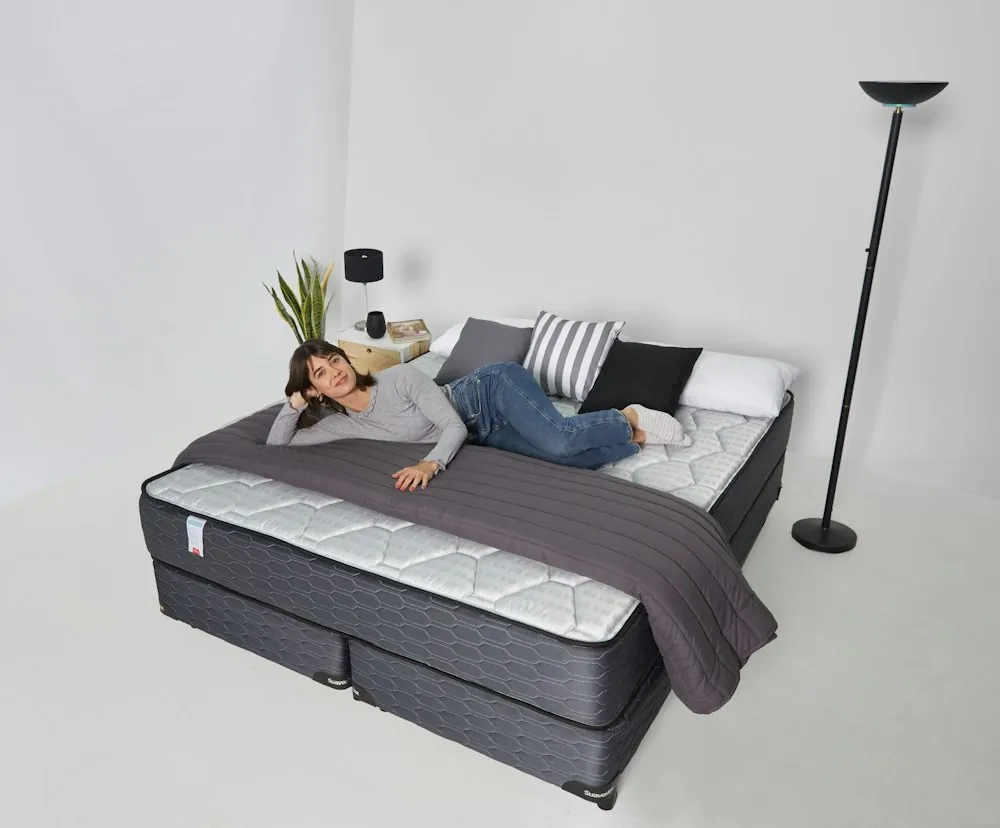
- Check the foundation first. Make sure the base is flat, solid and compatible with the mattress. A sagging box spring or widely spaced slats can make any mattress feel softer and less supportive than it really is.
- Allow the break-in window. Sleep on it nightly for at least two to four weeks before drawing conclusions, unless something is clearly wrong.
- Do the hand-gap test on your back. Lie on your back and slide a flat hand under your lower back. If it slides through with lots of room, the bed may be too firm for you; if you cannot get your hand in at all, it may be too soft.
- Get a side-view alignment photo. Lie on your side in your normal position and have someone photograph you from behind at mattress height. Your spine should look roughly straight from the neck to the tailbone, not dipping at the waist or angling up toward the hips.
- Keep a short sleep log. Each morning, note stiffness, numbness, pressure points and how often you woke. Patterns over two weeks matter more than any single night.
- Decide before the deadline. Note the trial end date and any minimum keep period. If the feel is wrong, initiate the return or exchange with time to spare.
Using a Topper to Adjust Firmness
A mattress topper is a 1–4 inch layer placed on top of your mattress. It is the simplest way to fine-tune firmness without replacing the whole bed, but it works mainly in one direction: making a firm mattress softer.
| Topper material | Effect on feel | Best for |
|---|---|---|
| Memory foam (2–3 in) | Softens noticeably; deep contouring, slow response | Side sleepers on a too-firm bed |
| Latex (2–3 in) | Softer options add cushioning with bounce; firmer options add a slight firming effect | Combination sleepers, hot sleepers |
| Fiber or down-alternative | Adds a plush, pillowy surface with limited support | Light sleepers wanting a softer surface feel |
A firm latex topper can make a slightly soft mattress feel a little firmer, but it cannot restore support to a sagging core, because it simply follows the dip underneath. If your bed has visible sags, read our mattress care and replacement guide.
Mattress Firmness Guide Checklist: Signs Your Bed Is Too Firm or Too Soft
Your body usually tells you when firmness is off. Look for consistent patterns over a couple of weeks rather than one rough night.
Signs your mattress is too firm
- Numbness or tingling in the arm or hand you sleep on
- Soreness at the shoulder, hip or knee pressure points, especially for side sleepers
- Frequent tossing and turning to relieve pressure
- A gap under your lower back when lying flat
Signs your mattress is too soft
- Lower back stiffness in the morning that eases after you get moving
- A feeling of being “stuck” or having to climb out to change position
- Hips noticeably lower than shoulders when lying on your back or stomach
- Visible body impressions where you sleep
Important: Persistent or worsening pain, numbness that does not resolve soon after getting up, or pain that wakes you at night are not just mattress issues. See a doctor or physical therapist rather than relying on a firmness change alone.
For how firmness fits alongside materials, budget and trial terms, see our guide on how to choose a mattress; the Sleep Foundation also publishes useful general sleep guidance.
The Bottom Line
The right firmness is personal, but it is not random. Start with your dominant sleep position and body weight, use the matrix above to choose a range, and remember that support and firmness are separate qualities. Expect a little softening during break-in, use your trial actively, and remember that a topper can soften a firm bed but cannot rescue a sagging one. At ExportAZ, our advice is to choose the firmness that keeps your spine neutral first and feels pleasant second.
Frequently Asked Questions
What is the most popular mattress firmness?
Medium-firm, roughly 6 on the 1–10 scale, is the most common rating on the market because it suits a wide range of back and combination sleepers of average weight. Lightweight side sleepers often find it too firm, while heavier stomach sleepers may find it too soft, so adjust from that midpoint.
Is a firmer mattress better for your back?
Not necessarily. Very firm mattresses can create pressure points and leave the lower back unsupported in a gap. What generally helps is good alignment, which often comes from a medium to medium-firm surface over a supportive core. People with persistent back pain should speak with a doctor or physical therapist, and can read our back pain guide for more detail.
How long does it take for a new mattress to soften?
Most mattresses settle over the first few weeks of regular use, and many brands suggest allowing around 30 days before judging comfort. The softening is usually modest. Memory foam tends to change the most, while latex and coil-heavy hybrids change the least.
Can a topper make a soft mattress firmer?
Only slightly. A firm latex or dense foam topper can make the surface feel a little firmer, but it cannot restore support to a mattress that sags or has deep body impressions, because the topper follows the dip underneath. If your current bed is fundamentally too soft, replacing it, or exchanging it within the trial, is usually more effective.
Why does my memory foam mattress feel firmer in winter?
Traditional memory foam is temperature-sensitive: it stiffens when cool and softens as it warms. In a colder bedroom, the surface can feel noticeably firmer until your body heat warms it. Keeping the room temperature consistent, or choosing latex, poly-foam or a hybrid with less memory foam, reduces the effect.
What firmness should couples with different preferences choose?
If your needs differ by more than about one point on the scale, a single compromise firmness often leaves both people less comfortable. Better options include a split king with independent firmness on each side, a mattress with dual-firmness construction, or a mattress chosen for the partner needing more support, plus a half-width topper for the other partner.