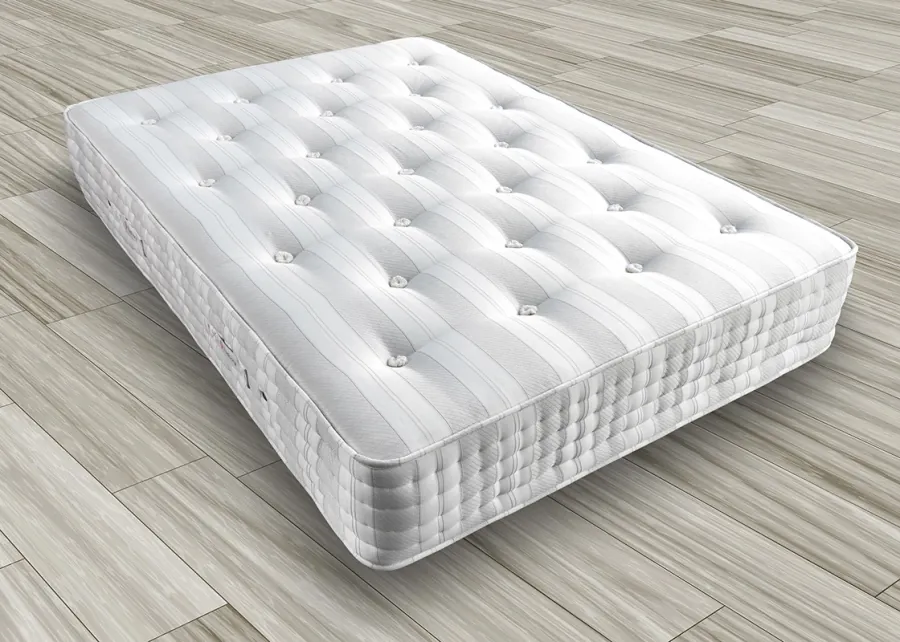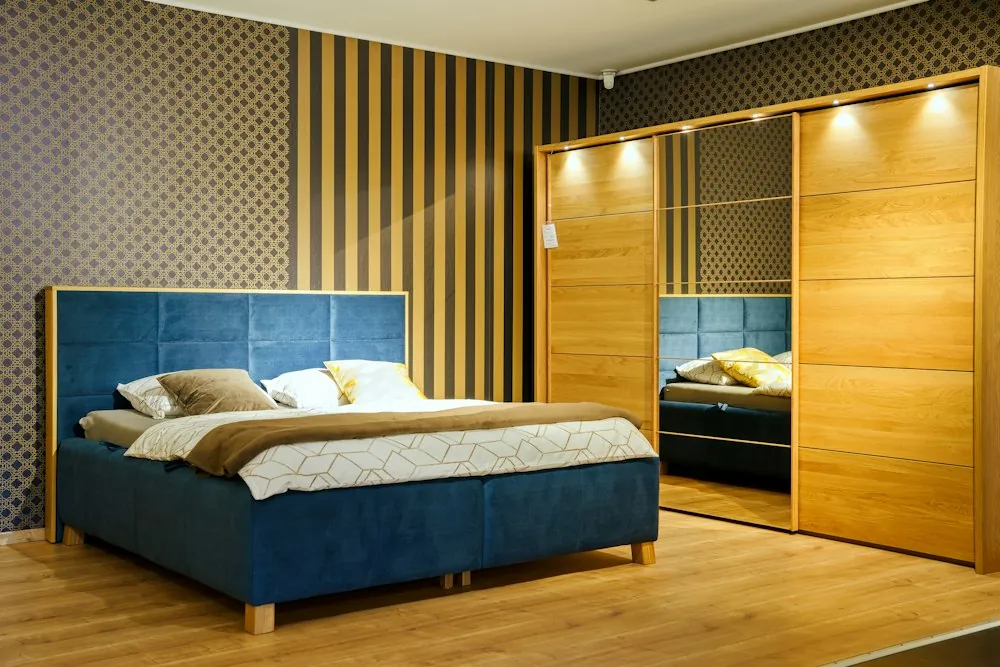
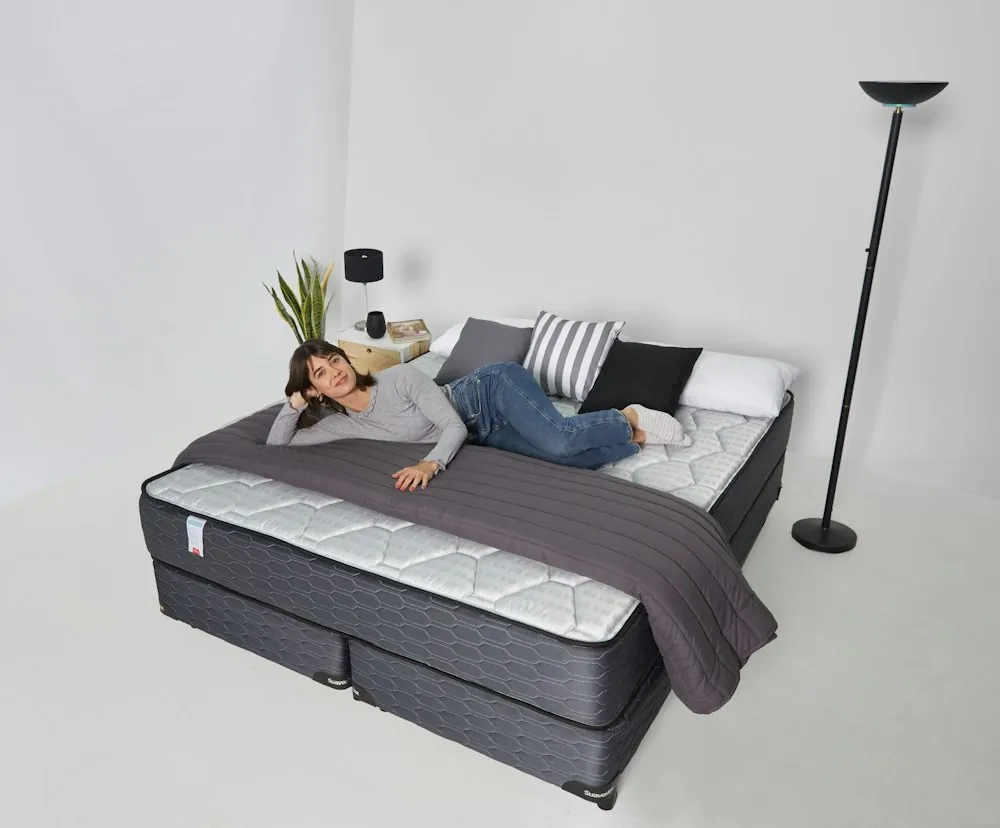
Knowing how to choose a mattress comes down to matching three things — your body, your sleep habits and your budget — to a bed that will still feel right in year seven, not just on night one.
Hundreds of online brands, look-alike “bed-in-a-box” models, permanent “sales” and vague labels like luxury firm make mattresses hard to compare. The variables that actually matter are few, though. This guide walks through each decision in order — position, weight, firmness, type, size, budget and fine print — and finishes with the red flags we see most often at ExportAZ plus a checklist to use before you buy.
Key Takeaways
- Start with sleep position and body weight — together they do most of the work of narrowing down the right firmness.
- Firmness is a comfort preference; support is about keeping your spine in neutral alignment. You need both.
- Hybrids and latex usually sleep cooler and have better edges than all-foam beds; memory foam leads on motion isolation.
- For couples, a queen is the minimum comfortable size; a king gives each sleeper about the width of a twin.
- Read the trial and warranty terms before you pay: break-in periods, return fees and the indentation threshold matter more than headline numbers.
Step One of How to Choose a Mattress: Your Sleep Position
Your primary sleep position decides where the mattress needs to give and where it needs to push back. The goal is always a spine close to its natural alignment, but the pressure points differ.
Side sleepers
Side sleeping concentrates weight on the shoulder and hip, the two widest parts of the body. A mattress that is too firm forces those points upward, bending the spine and often causing numb arms or sore hips by morning. Most side sleepers do best around 4–6 on the firmness scale, with a thick comfort layer (roughly 3 inches or more of foam or latex) that lets the shoulder sink in.
Back sleepers
Back sleepers need the lumbar curve supported so the hips don’t sag below the shoulders. A medium-firm surface, around 5–7, works for most. Zoned support, slightly firmer under the hips, can help.
Stomach sleepers
Stomach sleeping is the position most vulnerable to a soft mattress. When the hips sink, the lower back hyperextends. Stomach sleepers generally need a firmer, more buoyant surface, around 6–8, with a thin comfort layer. If you wake with lower-back stiffness, our guide to mattresses for back pain goes deeper on this.
Combination sleepers
If you change positions through the night, prioritize responsiveness. Slow-sinking memory foam can make turning feel like climbing out of a hole. Latex, hybrids and faster-responding foams in the 5–6 range are the usual sweet spot.
How Body Weight Changes the Equation
The same mattress feels different depending on who lies on it. A model rated 6/10 can feel like a 7 to a lighter person and a 5 to a heavier one, because heavier bodies compress the comfort layers further and reach the support core sooner.
| Body weight | Side | Back | Stomach | What to look for |
|---|---|---|---|---|
| Under 130 lb | 3–5 | 4–6 | 5–6 | Softer comfort layers; firm beds may never “open up” for you |
| 130–230 lb | 4–6 | 5–7 | 6–7 | Most mainstream “medium” and “medium-firm” models fit |
| Over 230 lb | 5–6 | 6–8 | 7–8 | Thicker beds (12"+), coil support, high-density foams, strong edges |
Heavier sleepers should also check materials: low-density polyfoam (under about 1.8 lb/ft³) and memory foam under about 3 lb/ft³ tend to soften faster, while sturdy coils and latex hold up best.
Understanding the 1–10 Firmness Scale
There is no industry-wide firmness standard, so brands label their products however they like. Most reviewers, ourselves included, use a 1–10 scale to make comparisons possible.
| Rating | Label | How it feels | Typically suits |
|---|---|---|---|
| 1–2 | Extra soft | Deep sink, heavy hug; rare | Very light side sleepers |
| 3–4 | Soft | Noticeable contouring at shoulders and hips | Lighter side sleepers |
| 5 | Medium | Balanced contour and lift | Side and combination sleepers |
| 6 | Medium-firm | Light hug, mostly “on top” | The broadest range of sleepers |
| 7–8 | Firm | Minimal sink, strong push-back | Back, stomach and heavier sleepers |
| 9–10 | Extra firm | Close to a floor-like surface | Niche preference |
Firmness is how the surface feels; support is whether the bed keeps your spine aligned. A soft mattress can be supportive, and a firm one can still let heavier areas sag. For a deeper breakdown, see our mattress firmness guide.
Pro tip: If you are torn between two firmness levels, choose the slightly firmer one. Most mattresses soften a little over the first few months, and you can always add a 2–3 inch topper to a firm bed — you can’t make a soft bed firmer.
Mattress Types at a Glance
Construction drives feel, temperature, bounce and lifespan. Here is the short version; our full memory foam vs. hybrid vs. latex comparison covers each in detail.
- Memory foam: slow, body-hugging contour and excellent motion isolation. Can trap heat and make repositioning harder.
- Hybrid: pocketed coils under several inches of foam or latex. Balanced feel, better airflow, stronger edges, higher price.
- Latex: buoyant, responsive and very durable. Naturally cooler than memory foam; heavy and often expensive.
- Innerspring: coils with a thin comfort layer. Bouncy and affordable, but less pressure relief and a shorter lifespan.
- Airbed (adjustable air): air chambers you inflate or deflate; useful for couples with very different preferences, with more parts that can fail.
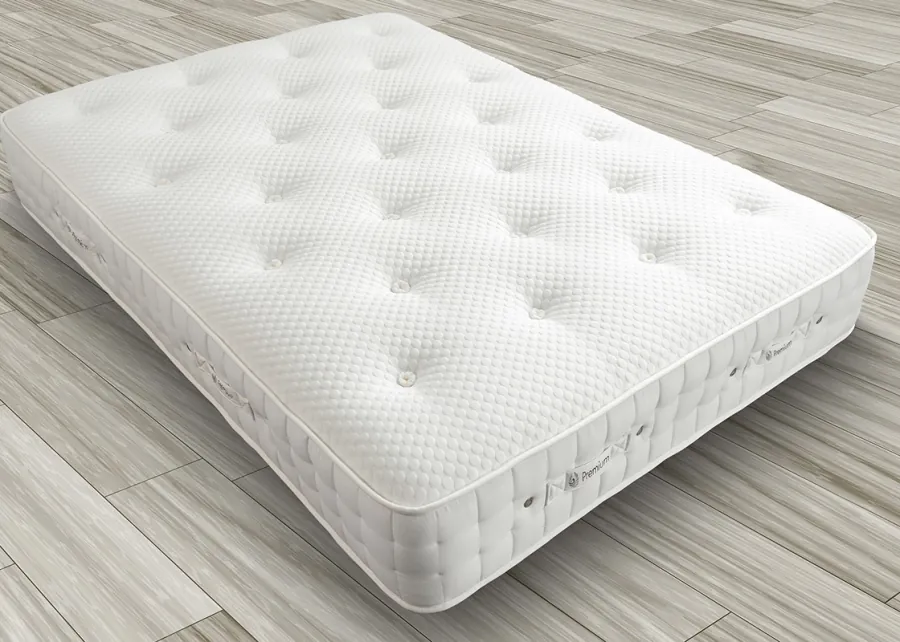
Mattress Sizes and Dimensions
A useful rule: leave about 24–30 inches of walking space on at least two sides of the bed.
| Size | Dimensions (W × L) | Best for | Minimum room (approx.) |
|---|---|---|---|
| Twin | 38" × 75" | Kids, bunk beds, small guest rooms | 7' × 10' |
| Twin XL | 38" × 80" | Teens, tall single adults, dorms | 7' × 10' |
| Full / Double | 54" × 75" | Single adults; tight for two | 10' × 10' |
| Queen | 60" × 80" | Most couples, single adults who like space | 10' × 10' |
| King | 76" × 80" | Couples, co-sleeping kids or pets | 12' × 12' |
| Split King | Two 38" × 80" | Adjustable bases, different firmness needs | 12' × 12' |
| California King | 72" × 84" | Tall sleepers, narrower long rooms | 12' × 12' |
A queen gives each partner 30 inches — eight inches narrower than a single twin. That’s workable, but if either of you sprawls, runs warm or shares the bed with a pet, a king is worth the extra cost.
Setting a Realistic Budget
Price correlates with materials and durability up to a point, then mostly with branding. These are typical queen price ranges before discounts:
| Tier | Queen price | What you usually get |
|---|---|---|
| Budget | Under $500 | Polyfoam or basic innerspring; lower-density foams; shorter lifespan |
| Mid-range | $500–$1,000 | Better memory foam beds and entry hybrids; the best value zone for many |
| Upper mid | $1,000–$1,800 | Quality hybrids, zoned coils, latex layers, better edge support |
| Premium | $1,800+ | All-latex, organic certifications, thick pillow-tops, luxury covers |
Divide the price by the years you expect to use it. A $1,200 hybrid that lasts eight years costs about $150 a year; a $400 foam bed that sags in four years costs $100 a year and four years of worse sleep. Online brands discount almost constantly, so the “sale” price is usually the real price — never pay list.
Not sure where to start?
Answer a few quick questions about how you sleep, your weight and your budget, and our Mattress Finder will suggest a firmness range and mattress type to shortlist.
Take the Mattress Finder QuizMotion Isolation for Couples
If your partner’s tossing, late nights or early alarms wake you, motion isolation should be near the top of your list. Memory foam absorbs movement best because it responds slowly. Hybrids with individually pocketed coils and a thick foam comfort layer come close. Latex is moderate, and traditional innersprings with connected coils transfer motion the most.
In our testing we use a weighted drop — a kettlebell or a wine glass placed at set distances from the impact point — to compare how much movement crosses the bed. Our roundup of the best mattresses for motion isolation lists the models that performed best in that test.
Couples with very different needs can consider split kings, dual-firmness models or adjustable airbeds.
Edge Support
Edge support is how well the perimeter holds up when you sit or sleep near it. Weak edges shrink the usable surface and make getting in and out of bed harder — a bigger deal for couples on smaller beds and anyone with limited mobility.
Hybrids and innersprings usually perform best, especially those with reinforced perimeter coils or foam encasement. All-foam beds tend to compress more at the edge. To check, sit on the corner and the middle of the side: if you sink several inches and slide toward the floor, the edge is weak.
Cooling and Temperature
Dense, close-conforming foam surrounds the body and slows heat loss; coils and latex let air circulate. The biggest cooling factors are:
- Support core: pocketed coils allow far more airflow than solid foam.
- Comfort material: latex and open-cell foams breathe better than traditional memory foam.
- Firmness: sleeping “on top” of a firmer surface means less body contact and less trapped heat.
Gel, copper and graphite infusions help a little at most; they don’t turn dense memory foam into a cool bed. Our cooling mattress guide for hot sleepers covers the full picture.
Certifications Worth Knowing
Certifications are one of the few objective signals in mattress marketing — as long as you know what each one actually covers. Always check whether a certification applies to the whole mattress or just one component.
| Certification | Covers | What it means |
|---|---|---|
| CertiPUR-US | Polyurethane foams | Foam made without certain flame retardants, ozone depleters, heavy metals and specific phthalates, and tested for low VOC emissions. It is not an organic or “natural” claim. |
| GOLS | Latex | Global Organic Latex Standard: the latex is made predominantly from certified organic natural rubber. |
| GOTS | Textiles (cotton, wool) | Global Organic Textile Standard: covers organic fiber content plus processing and social criteria across the supply chain. |
| OEKO-TEX Standard 100 | Textiles and components | Tested for a list of harmful substances. It is a safety test, not an organic certification. |
| GREENGUARD Gold | Finished product | Meets strict chemical-emission limits for indoor air, designed with sensitive groups like children in mind. |
Watch out: “Made with organic cotton” or “natural latex” on a product page is not the same as a certified organic mattress. Look for the certifier’s name and, ideally, a license number you can verify.
Trial Periods, Warranties and Returns
Because you can’t truly judge a mattress in ten minutes, the sleep trial is your safety net. Most online brands offer 90 to 365 nights. Before you buy, check:
- Break-in requirement: many brands require you to keep the bed 30 nights before returning. Your body really does need a few weeks to adjust.
- Return costs: some returns are free; others deduct pickup or “transportation” fees that can run to a few hundred dollars.
- Limits and exclusions: some allow one return per household, and clearance or floor models are often excluded.
Warranties typically run 10 years to “lifetime,” but the details matter more than the length. Check the indentation depth that counts as a defect (often 1 to 1.5 inches), whether coverage is prorated after a set number of years, and what foundation is required. Stains and an unsupportive frame can void coverage, so use a protector.
Buying Online vs. In Store
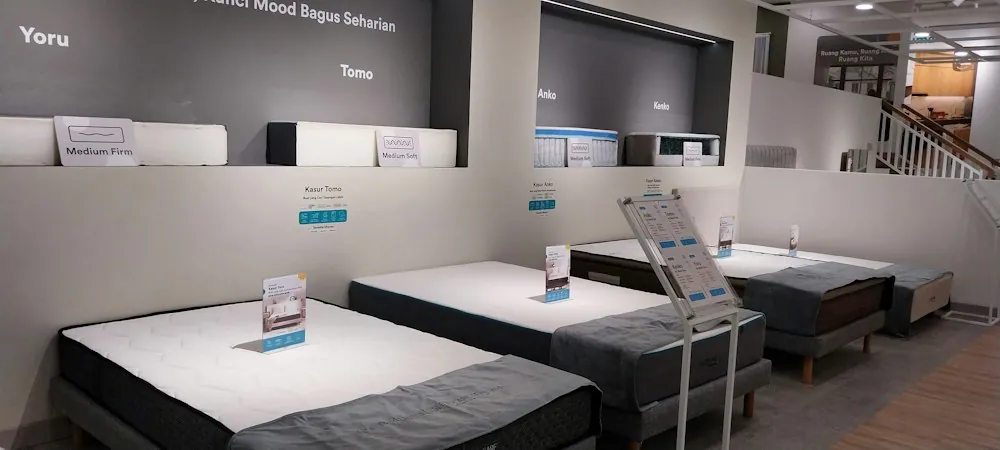
Online brands usually offer lower prices, longer trials and free shipping, but you can’t try before you buy and returns can be a hassle. In store, you can compare feels and often get white-glove delivery, but models are frequently renamed per chain, which blocks price comparisons, and trials tend to be shorter.
A practical approach: test categories in a store to learn your preferred type and firmness — lying in your real sleep position for 10–15 minutes per bed — then buy the best-value option online with a generous trial.
Red Flags and Marketing Tricks
Patterns we see most often when reviewing mattress brands at ExportAZ:
- Permanent sales and inflated list prices. If the discount never ends, the “original” price was never real.
- “Orthopedic,” “chiropractor-approved” or “doctor-recommended.” These terms are not regulated and rarely point to any meaningful evidence.
- Coil count bragging. Beyond a reasonable threshold, coil gauge, design and comfort layers matter more than raw count.
- Exclusive model names. The same bed sold under different names at different retailers prevents comparison shopping.
- Cooling miracle claims. A pinch of gel or copper is not a cooling system.
- Review sites with no testing method. Look for evidence of hands-on testing and a clear affiliate disclosure.
Step-by-Step Checklist: How to Choose a Mattress
- Identify your main sleep position. Yours and your partner’s.
- Factor in body weight. Use the table above to narrow your firmness range to two or three points.
- Note any pain. Persistent back, hip or shoulder pain deserves a doctor or physical therapist’s input, not just a new bed.
- Choose a mattress type. Prioritize what matters most: contour (memory foam), balance and edges (hybrid), durability and bounce (latex), or price (innerspring).
- Pick a size. Measure your room, doorways and frame.
- Set a budget. Think in cost per year, and include a protector, pillows and any new base.
- Check couple factors. Motion isolation, edge support and whether a split or dual-firmness option makes sense.
- Consider temperature. If you run hot, lean toward hybrids, latex and firmer surfaces.
- Verify certifications. Confirm which components are certified and by whom.
- Read the fine print. Trial length, break-in period, return fees, warranty indentation depth and proration.
- Give it time. Sleep on it for at least three to four weeks before deciding whether to keep it.
The Bottom Line
If you remember one thing about how to choose a mattress, make it this: buy for your body and your sleep position first, and let marketing come last. Narrow firmness using position and weight, choose the construction that matches your priorities, then protect yourself with a solid trial and a warranty you’ve actually read.
If you’d like a second opinion, our team at ExportAZ offers a Mattress Match Consultation that walks through your sleep habits and shortlist. For general sleep-health guidance, the Sleep Foundation is a useful starting point. And when your current bed starts to sag, our mattress care and replacement guide will help you decide when it’s time.
Frequently Asked Questions
What firmness mattress is best for most people?
Medium-firm, around 6 on a 1–10 scale, suits the widest range of sleepers because it combines some pressure relief with solid support. That said, “most people” isn’t you. Lighter side sleepers often prefer something softer, while heavier back and stomach sleepers usually need firmer. Use your sleep position and body weight to narrow it down.
How long should a mattress last?
Most mattresses last roughly 6–8 years, but it varies by material and use. Latex often lasts longer, sometimes 10 years or more, while budget innersprings and low-density foams may wear out sooner. Replace yours when you see visible sagging, feel lumps, or consistently wake up stiff and sleep better elsewhere.
Do I need a box spring with a new mattress?
Usually not. Most modern foam and hybrid mattresses work on a platform bed, slatted frame or foundation, but slat gaps are often required to be about 3 inches or less. Traditional box springs with real springs can actually void some warranties. Check your manufacturer’s foundation requirements before buying a new base.
How long does it take to adjust to a new mattress?
Expect about three to four weeks. Your body is used to your old mattress, and new materials, especially foams, also soften slightly as they break in. Short-term aches in the first week or two are common. If discomfort persists or worsens after a month, the firmness may be wrong for you, which is exactly what the trial is for.
What mattress type is best for couples?
Hybrids are often the best all-round choice for couples because they combine reasonable motion isolation from foam comfort layers with strong edge support and good airflow from pocketed coils. If motion isolation is the top priority, all-foam memory beds absorb movement best. Couples with very different needs can consider a split king or dual-firmness model.